Root Canal Treatment (RCT) in Noida
Modern root canal assessment and treatment by Dr Naina Garg, MDS in Conservative Dentistry & Endodontics, using rotary instruments and local anaesthesia where appropriate.
What is Root Canal Treatment?
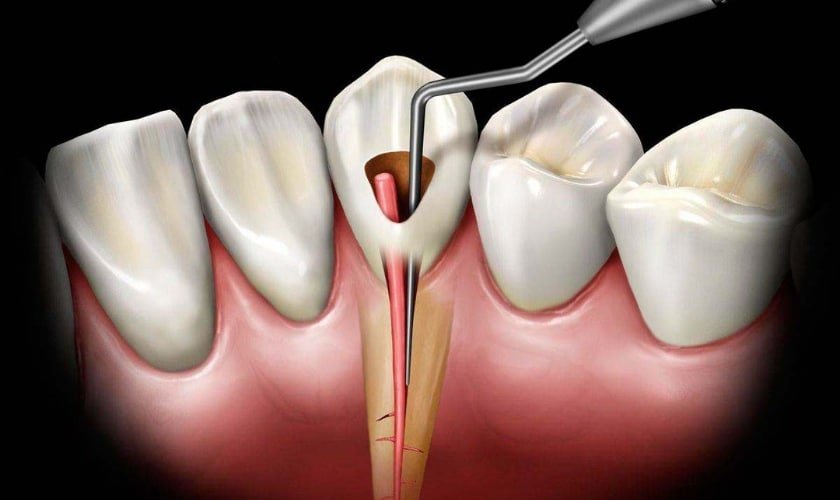
Root canal treatment (RCT) is a procedure to save a badly infected or damaged tooth. The infected pulp (nerve tissue) inside the tooth is removed, the canals are cleaned and shaped, and the tooth is sealed and restored with a crown. This saves your natural tooth from extraction.
Why Dr. Naina for RCT in Noida?
Dr. Naina Garg holds an MDS in Conservative Dentistry & Endodontics — the exact specialization for root canal treatment. She secured All India 8th Rank in her postgraduate entrance, bringing exceptional skill to every procedure.
- Rotary endodontics — faster, more precise canal shaping
- Electronic apex locators — accurate canal length measurement
- Local anaesthesia — used to keep the tooth numb and improve comfort during treatment
- Single-sitting RCT available for suitable cases
- Complex-case assessment — including retreatment, calcified canals and multi-rooted teeth
The RCT Procedure — Step by Step
Diagnosis
X-ray and examination to assess infection extent
Cleaning
Infected pulp removed, canals cleaned with rotary instruments
Shaping & Filling
Canals shaped and sealed with biocompatible material
Crown
Tooth restored with a ceramic crown for full protection
Signs You May Need a Root Canal
- Severe, persistent toothache
- Sharp pain when biting or chewing
- Prolonged sensitivity to hot or cold
- Darkening or discoloration of a tooth
- Swollen, tender gums near a tooth
- Pimple or abscess on the gums
🚫 Myth: Root Canals Are Painful
Fact: Local anaesthesia is used to numb the tooth during RCT. Many patients report little discomfort during treatment, but individual experiences vary. Temporary tenderness after treatment can occur and should be discussed with your dentist.
RCT Cost in Noida
Root canal treatment at Smileline starts at ₹3,000. The final fee depends on the tooth involved (front tooth, premolar or molar), infection and case complexity. Crown charges are separate, and an itemised estimate is provided after examination. If you are comparing treatment options, read our guide to root canal versus tooth extraction.
Understanding Root Canal Treatment in Detail
Inside every tooth is a soft tissue called the dental pulp, which contains nerves, blood vessels, and connective tissue. The pulp nourishes the tooth during its growth and development. Once a tooth is fully mature, it can survive without the pulp because it continues to receive nourishment from the surrounding tissues.
When the pulp becomes infected — due to deep decay, cracks, chips, or repeated dental procedures — bacteria multiply inside the tooth. Left untreated, this infection can cause an abscess (a pus-filled pocket) at the tip of the root, bone loss around the root tip, and swelling that may spread to the face, neck, or head.
Root canal treatment removes the infected pulp, eliminates the bacteria, and seals the tooth to prevent reinfection. The treated tooth is then protected with a dental crown for long-term strength and function.
Modern RCT Technology at Smileline
Dr. Naina Garg uses state-of-the-art equipment that makes root canal treatment faster, more precise, and far more comfortable than older methods:
- Rotary NiTi instruments — Flexible nickel-titanium files that shape root canals more efficiently and with greater precision than manual stainless steel files
- Electronic apex locators — Digitally measure the exact length of each canal, reducing the need for multiple X-rays and improving accuracy
- Ultrasonic irrigators — Deliver antimicrobial solutions deep into canal crevices, ensuring thorough disinfection
- Rubber dam isolation — A small sheet isolates the tooth being treated, keeping it dry and preventing bacteria from saliva entering the canals
- Bioceramic sealers — Advanced materials that create a hermetic seal inside the canal, promoting healing and reducing the chance of reinfection
Who Needs Root Canal Treatment?
You may be a candidate for RCT if you experience any of the following:
- Severe, spontaneous toothache that wakes you at night
- Prolonged pain when consuming hot or cold foods and beverages
- Pain when biting or applying pressure on a tooth
- A darkened or discoloured tooth compared to its neighbours
- Swelling, tenderness, or a small pimple on the gums near a tooth
- A deep cavity that has reached the nerve of the tooth
- A cracked or fractured tooth exposing the inner pulp
- Previously filled teeth that develop recurrent decay reaching the pulp
If you notice any of these symptoms, do not delay. Early treatment saves the tooth and prevents the infection from spreading.
Recovery & Aftercare
Recovery after a root canal is straightforward. Most patients return to their routine the same day.
Immediately After Treatment
- Numbness from anesthesia wears off in 2–4 hours; avoid eating on that side until sensation returns
- Mild soreness is normal for 2–3 days and responds well to over-the-counter pain relievers
- Avoid chewing hard or crunchy foods on the treated tooth until the permanent crown is placed
Following Weeks
- Get the permanent dental crown placed within 2–4 weeks to protect the treated tooth from fracture
- Maintain regular brushing and flossing; the treated tooth requires the same care as all other teeth
- Attend the scheduled follow-up appointment so Dr. Naina can verify healing with an X-ray
Long-Term Success
A root-canal-treated tooth that is properly restored and maintained can remain functional for many years, but longevity varies. Continue with regular reviews and professional cleanings, and report unusual symptoms promptly.
Why Choose Smileline for Root Canal in Noida?
Root canal treatment requires diagnosis, careful disinfection and an appropriate final restoration. Smileline's approach includes:
- MDS in Conservative Dentistry & Endodontics — Dr. Naina Garg's postgraduate specialisation is the exact discipline covering root canal treatment. She trained at KGMC and PGI Rohtak and achieved All India 8th Rank
- Endodontic training and experience — Dr Naina Garg's MDS specialization covers root canal diagnosis and treatment, including assessment of more complex cases
- Comfort-focused care — Local anaesthesia, clear explanations and aftercare guidance are used; no clinical procedure can be guaranteed entirely pain-free for every patient
- Single-sitting RCT when possible — For uncomplicated cases, the entire root canal can be completed in one visit, saving you time
- Transparent pricing with EMI — No hidden charges; flexible payment plans available
- Patient feedback — Independent reviews can help you understand other patients' experiences, but they do not guarantee an individual result
Clinical reference
For independent patient information, see the American Association of Endodontists: What is a root canal?. Symptoms and treatment needs vary, so an examination and dental imaging may be required.
Root Canal Treatment Case
This published Smileline case shows the tooth before treatment and after restoration. The appropriate restoration and result depend on the tooth and diagnosis.
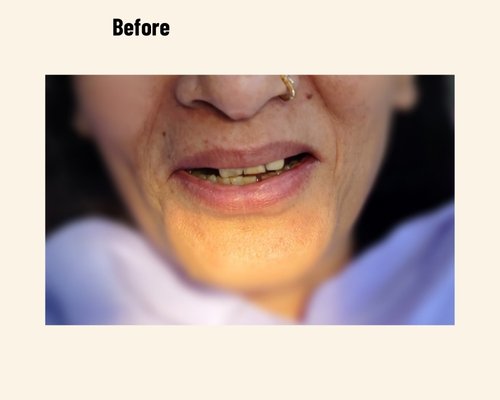
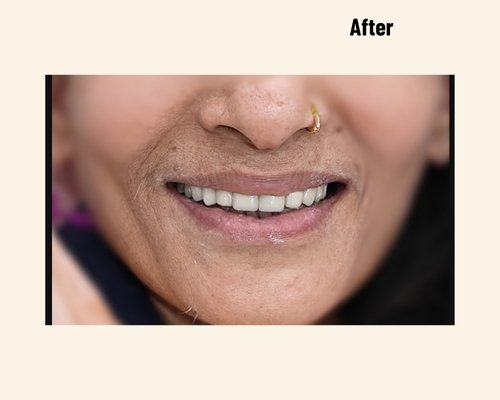
⭐
4.9/5
500+ Google Reviews
Frequently Asked Questions
Is root canal treatment painful?
Local anaesthesia is used to numb the tooth. Many patients report little discomfort during treatment, although temporary tenderness afterwards can occur and experiences vary.
How much does RCT cost in Noida?
Root canal treatment at Smileline starts at ₹3,000. The final fee depends on the tooth type, infection and complexity; crown charges are separate. An examination is required for an exact quotation.
Can root canal be done in one sitting?
Yes, single-sitting RCT is available for many cases at Smileline. Dr. Naina will assess your case and recommend the best approach.
How long does a root canal take?
Typically 30-60 minutes per sitting. Single-sitting RCT takes about 45-90 minutes depending on the tooth.
What happens if I don't get a root canal?
The infection can spread to surrounding teeth and bone, causing abscess, bone loss, and eventually tooth loss. Early RCT saves the tooth.

