Dental Implants in Noida
Fixed tooth-replacement options planned after an individual examination, dental imaging and discussion of suitable implant systems.
What Are Dental Implants?
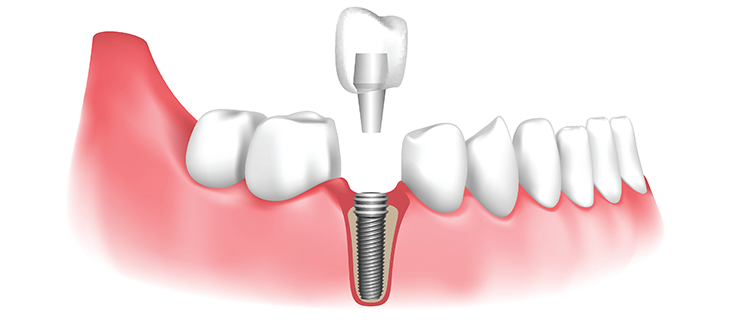
Dental implants are titanium posts surgically placed into the jawbone to act as artificial tooth roots. Once healed, a custom crown is fitted on top and designed to resemble a natural tooth. Unlike removable dentures, implants are fixed; their longevity depends on health, hygiene, bite forces and ongoing maintenance.
Why Choose Smileline for Dental Implants in Noida?
- Individual treatment planning — Bone levels, gum health, medical history and restorative needs are assessed before treatment
- Documented implant options — The proposed implant system and restorative components are explained before treatment
- Imaging-led planning — Dental imaging, including CBCT when clinically indicated, is used to assess anatomy and bone
- Comfort-focused procedure — Local anaesthesia and clear aftercare instructions help minimise discomfort
- 4.9★ Google rating — Read independently published patient feedback before choosing your care
The Implant Procedure — Step by Step
Consultation
Examination, appropriate imaging and an itemised treatment plan
Implant Placement
Implant fixture placed in the planned position under local anaesthesia
Healing
Integration time varies with the site, bone, procedure and individual healing
Crown Fitting
A custom crown is fitted after healing and bite assessment
Who May Be Suitable for Dental Implants?
- Missing one or more teeth
- Uncomfortable with dentures
- Want a fixed option that can be maintained with daily brushing, flossing and regular reviews
- Sufficient bone for the planned implant, or a clinically appropriate site-development plan
- Healthy or stabilised gums and realistic expectations about healing and maintenance
Suitability also depends on medical history, medicines, smoking, bite and the proposed restoration. Read our detailed dental implant suitability guide.
Individual Implant Planning
The implant system, crown or prosthesis, imaging and any bone procedure are selected only after clinical and radiographic assessment. The treatment sequence is documented and explained before care begins.
Implants vs Dentures vs Bridges
| Feature | Implants | Dentures | Bridges |
|---|---|---|---|
| Longevity | Can function for many years; maintenance affects outcome | May need adjustment, relining or replacement | Varies with support teeth, hygiene and bite |
| Appearance | Designed to match nearby teeth | Varies by fit and material | Designed to match nearby teeth |
| Bone at Missing-Tooth Site | Functional loading may help maintain local bone | Does not replace the tooth root | Does not replace the tooth root |
| Adjacent Teeth | Usually not prepared as supports | May use clasps or rests, depending on design | Usually prepared as supports |
| Maintenance | Daily cleaning around the implant | Daily removal and cleaning | Cleaning beneath the bridge |
For a focused comparison, see dental implant versus bridge.
Types of Dental Implants
Not all implants are the same. At Smileline Dental in Noida, Dr. Naina Garg evaluates your jaw structure, bone density, and oral health to recommend the most suitable implant system for your situation.
Single Tooth Implants
When one tooth is missing, an implant can support an independent crown without preparing neighbouring teeth as bridge supports. Suitability depends on bone, gums, bite and restorative space. Read the complete single-tooth implant guide.
Multiple Tooth Implants
If you have lost several teeth in a row, two or more implants can support a fixed bridge. This can avoid placing a separate implant for every missing tooth while providing a stable, maintainable restoration.
Full-Mouth / All-on-4 Implants
For patients missing most or all teeth, options can include a fixed full-arch bridge or a removable implant-supported overdenture. All-on-4 is one design, but the appropriate implant number and restoration depend on anatomy, bite, cleaning access and bone. Compare the choices in our full-mouth implant options guide.
Immediate-Load (Same-Day) Implants
In selected cases, implant stability, bone, bite and the restorative plan may permit an early temporary tooth. This is not suitable for every site and the temporary restoration is not the same as the definitive crown or bridge.
Benefits of Choosing Dental Implants
Depending on the clinical situation, implant-supported treatment may offer these advantages:
- Supports local bone function — Functional loading may help maintain bone around a healthy, integrated implant, although normal remodelling still occurs
- Preserves adjacent teeth — Unlike bridges, implants do not require grinding down healthy neighbouring teeth
- Stable chewing function — A well-integrated implant can provide a stable foundation for a replacement tooth
- Long-term option — Longevity varies with gum health, hygiene, smoking, bite forces, medical conditions and regular professional maintenance
- Denture stability — Implant support can improve retention for selected removable dentures
- Defined maintenance — Each restoration has a specific daily cleaning and professional review plan
Recovery & Aftercare
Tenderness, swelling, bruising or minor oozing can occur after implant placement, and the amount varies with the procedure and patient. Written aftercare instructions are provided for the specific surgery.
First 48 Hours
- Apply an ice pack externally for 15 minutes on, 15 minutes off to manage swelling
- Eat soft, cool foods — yogurt, smoothies, mashed vegetables, soups
- Avoid spitting, using a straw, or rinsing vigorously, as these actions can dislodge the blood clot
- Take only medicines prescribed or approved for your individual case
Weeks 1–2
- Gradually introduce semi-soft foods like pasta, scrambled eggs, and soft bread
- Gently rinse with warm salt water after meals
- Brush carefully around the implant site using a soft-bristle toothbrush
Integration Period
The implant post heals within the jawbone in a process called osseointegration. The duration varies by site, bone, procedure and individual health. Follow the loading and diet instructions for your temporary restoration and attend review appointments so healing can be assessed.
Long-Term Care
Once the final crown is placed, brush twice daily, clean around the implant as advised, and attend regular dental reviews and professional cleanings. Long-term performance varies, and implants require ongoing maintenance just like natural teeth.
Read the full implant procedure and recovery guide, including when to contact the clinic.
Why Choose Smileline Dental for Implants in Noida?
Choosing implant care should involve reviewing the proposed diagnosis, clinician's relevant training, implant system, alternatives, risks and follow-up plan. Smileline's approach includes:
- Qualified clinical lead — Dr Naina Garg holds a BDS from KGMU Lucknow and an MDS in Conservative Dentistry & Endodontics from PGI Rohtak
- Clear treatment responsibility — The clinician responsible for each surgical and restorative stage is identified during planning
- Appropriate imaging — Dental imaging, including CBCT when indicated, helps assess bone and nearby anatomy; no scan can remove all surgical risk
- Documented implant systems — Ask which implant brand and components are recommended for your case, why they are suitable and what maintenance they require
- Documented treatment plan — The fixture, abutment, crown or prosthesis, imaging and any additional procedures are explained before treatment
- Structured aftercare — Follow-up and maintenance requirements are explained as part of the treatment plan
- Patient feedback — Independent reviews can help you understand other patients' experiences, but they do not guarantee an individual result
Clinical reference
For an independent overview of treatment steps, benefits, risks and recovery, see Cleveland Clinic: Dental implants. Suitability and outcomes vary, so this page does not replace an examination or personalised advice.
Documented Implant Treatment Stage
This published Smileline clinical sequence shows a lower posterior missing-tooth area before treatment and two implant components visible during treatment. It is not presented as a final crown result. The implant system, grafting status and timeline are not inferred from photographs alone.


Individual anatomy, treatment and results vary. View the clinic's broader treatment gallery.
Explore the Dental Implant Guides
Watch Smileline's implant videos
See the clinic's public Implants story highlight on Instagram. Social media examples are educational and do not predict an individual result.
⭐
4.9/5
500+ Google Reviews
Frequently Asked Questions
Is dental implant surgery painful?
Local anaesthesia is used during placement. Temporary soreness or swelling can occur afterwards, and the amount varies by procedure and patient.
How long do dental implants last?
Implants can function for many years, but no lifetime can be guaranteed. Gum health, hygiene, smoking, bite forces, medical conditions and follow-up care all affect longevity.
Can I get same-day dental implants in Noida?
An early temporary tooth may be possible in selected cases when implant stability, bone, bite and the restorative design permit. It is not guaranteed and is different from the definitive crown or bridge.
Are dental implants suitable for everyone?
No. Suitability depends on bone, gum health, medical history, medicines, smoking, bite and the proposed restoration. Read the implant suitability guide and arrange an examination before deciding.

