When your dentist tells you that a tooth is badly decayed or infected, you're often faced with a difficult choice: root canal treatment (RCT) or tooth extraction? It's one of the most common dental dilemmas patients face, and the decision can affect your oral health for decades to come.
As an MDS specialist in Conservative Dentistry & Endodontics (the branch of dentistry focused on saving teeth), I always tell my patients: a saved tooth is almost always better than a replaced one. But there are situations where extraction makes more sense. This guide will help you understand both options so you can make an informed decision with your dentist.
What is Root Canal Treatment?
Root canal treatment (also called RCT or endodontic therapy) is a procedure that saves a badly infected or damaged tooth by removing the diseased pulp (nerve tissue) inside it. Here's how it works:
- Diagnosis: Your dentist takes an X-ray to assess the extent of infection and checks tooth vitality
- Anaesthesia: Local anaesthesia is administered to numb the area; individual comfort and response can vary
- Access Opening: A small opening is made in the crown of the tooth to access the pulp chamber
- Cleaning & Shaping: The infected pulp is removed and the root canals are cleaned, shaped, and disinfected using rotary instruments
- Filling: The cleaned canals are filled with a biocompatible material (gutta-percha) to seal them
- Crown Placement: A dental crown is placed over the treated tooth to protect it and restore its function
💡 Modern RCT: Rotary instruments, electronic apex locators and magnification can improve efficiency and precision. Some cases can be completed in one visit, while complex infection, anatomy or retreatment may require additional appointments.
When is Root Canal Treatment Needed?
- Deep cavity that has reached the tooth's nerve (pulp)
- Severe toothache, especially at night or with hot/cold foods
- Tooth abscess (infection at the root tip)
- Darkening or discolouration of a tooth
- Swelling in the gums near a specific tooth
- Cracked or fractured tooth where the nerve is exposed
- Tooth trauma from injury or accident
What is Tooth Extraction?
Tooth extraction is the complete removal of a tooth from its socket in the jawbone. While it sounds straightforward, extraction is not just "pulling a tooth out" — it's a surgical procedure that permanently removes a natural structure from your body.
Types of Tooth Extraction
Simple Extraction: Performed on a visible, fully erupted tooth. The dentist loosens the tooth with an instrument called an elevator and removes it with forceps. Cost: ₹500–₹2,000. Recovery: 2–3 days.
Surgical Extraction: Required for teeth that are broken at the gum line, impacted (stuck in the bone), or have curved roots. May involve cutting gum tissue and removing some bone. Cost: ₹2,000–₹5,000. Recovery: 5–7 days.
When is Extraction Necessary?
- Tooth is severely broken and cannot be restored with a crown
- Advanced periodontal (gum) disease with significant bone loss and tooth mobility
- Impacted wisdom teeth causing repeated infections or damage to adjacent teeth
- Orthodontic treatment requires space (premolar extractions)
- Vertical root fracture that cannot be repaired
- Failed previous root canal treatment that cannot be retreated
Root Canal vs Extraction — Side by Side Comparison
Here's a comprehensive comparison to help you understand the key differences between root canal treatment and tooth extraction:
| Factor | Root Canal Treatment | Tooth Extraction |
|---|---|---|
| Cost | ₹3,000 – ₹8,000 (+ crown ₹3,000–₹15,000) | ₹500 – ₹3,000; tooth replacement is planned separately |
| Pain During Procedure | Minimal — local anaesthesia | Minimal — local anaesthesia |
| Post-Procedure Pain | Mild discomfort for 1–2 days | Moderate pain for 3–7 days |
| Recovery Time | 1–2 days | 5–14 days |
| Preserves Natural Tooth? | ✅ Yes | ❌ No — tooth is permanently lost |
| Bone Loss? | No bone loss | Yes — jawbone starts deteriorating |
| Number of Visits | 1–2 visits | 1 visit (+ multiple for replacement) |
| Long-Term Cost | ₹6,000 – ₹23,000 (one-time) | May include separate tooth-replacement treatment |
| Longevity | 15–25+ years with proper care | Implant: 20+ years / Bridge: 7–15 years |
| Adjacent Teeth Affected? | No | Yes — neighbouring teeth may shift |
Consider the complete treatment: Extraction permanently removes the tooth and may require a separate replacement plan. The decision should consider restorability, bone, neighbouring teeth, healing, maintenance and long-term function rather than the extraction visit alone.
When to Choose Root Canal
Root canal treatment is the better choice in most situations. Here's when you should strongly consider saving your tooth with RCT:
- The tooth can be saved: If there's enough healthy tooth structure remaining to support a crown, RCT is almost always preferable
- It's a front tooth: Replacing a front tooth requires separate surgical and restorative planning. Saving it with RCT preserves natural appearance
- You want to avoid bone loss: Extraction leads to jawbone resorption within months, which can affect facial structure and make future implants harder
- Preserves function: Keeping a restorable natural tooth can avoid a separate missing-tooth replacement pathway
- You're young: Preserving natural teeth for as long as possible is especially important for younger patients
- Adjacent teeth are healthy: Don't sacrifice a tooth when surrounding teeth are intact — it can start a cascade of problems
Save Your Tooth — Book a Consultation
Expert assessment by MDS Endodontist Dr. Naina Garg
When Extraction is the Better Option
Despite the advantages of root canal treatment, there are specific situations where extraction is the clinically correct choice:
- Severe structural damage: If the tooth is fractured below the gum line or has a vertical root fracture, it cannot be restored even with RCT
- Advanced periodontal disease: When gum disease has destroyed the supporting bone and the tooth is highly mobile (Grade 3 mobility), RCT won't help — the problem is the bone, not the nerve
- Impacted wisdom teeth: Third molars that are partially erupted, causing repeated infections, or damaging adjacent teeth should be extracted
- Orthodontic treatment: Sometimes teeth (usually premolars) need to be extracted to create space for braces to align remaining teeth properly
- Failed root canal: If a previously root-canal-treated tooth has persistent infection that cannot be resolved with retreatment or apicoectomy
- Supernumerary teeth: Extra teeth that are causing alignment or bite problems
Considering extraction? If you are uncertain, ask why the tooth is considered non-restorable and whether an endodontic opinion would change the options. The decision depends on remaining tooth structure, cracks, periodontal support, infection, restorability and overall health.
Why Saving Your Natural Tooth is Almost Always Better
Your natural teeth are marvels of biological engineering. No artificial replacement — no matter how advanced — can perfectly replicate what nature gave you. Here's why preserving your natural tooth matters:
Natural Tooth Advantages
✅ Benefits of Saving (RCT)
- Natural appearance — looks and feels like your own tooth
- Normal biting force and chewing efficiency
- Preserves jawbone structure
- Proprioception — you can feel pressure and texture
- No surgery or healing period needed
- Prevents adjacent teeth from shifting
❌ Risks of Extraction
- Permanent loss of natural tooth structure
- Jawbone begins deteriorating within weeks
- Adjacent teeth shift into the gap
- Opposite tooth over-erupts
- Bite alignment changes over time
- Implant surgery carries its own risks
- A replacement plan may involve additional procedures
A key point many patients miss: even the best dental implant doesn't have a periodontal ligament — the thin layer of tissue between your natural tooth and bone that acts as a shock absorber and provides sensation. An implant is directly fused to bone (osseointegration), which means you lose the ability to feel pressure differences. This might sound minor, but it affects how you eat and can lead to over-biting on the implant side.
Root Canal Treatment at Smileline Dental Noida
If you're considering root canal treatment, here's what makes Smileline Dental Clinic the preferred choice for thousands of patients across Noida and NCR:
- Specialist Endodontist: Dr. Naina Garg holds an MDS in Conservative Dentistry & Endodontics — the specialisation dedicated to saving teeth. She has performed over 5,000+ successful root canal treatments
- Single-Sitting RCT: Most root canals are completed in a single 45–60 minute appointment using advanced rotary instruments — no need for multiple visits
- Comfort-Focused Procedure: Local anaesthesia is used to numb the area, while comfort and recovery vary by patient and case complexity
- Advanced Technology: Electronic apex locators for precise canal measurement, rotary NiTi files for efficient cleaning, and digital X-rays for accurate diagnosis
- High Success Rate: Our single-visit RCT success rate exceeds 95%, which is on par with international standards
- Affordable Pricing: RCT starts at ₹3,000 with 0% EMI options available. We believe saving teeth shouldn't break the bank
📍 Clinic Location: Smileline Dental Clinic, D-83, Sector 27, Noida — near Punjab National Bank. Open Mon–Sat, 9:30 AM–2 PM and 4:30–7:30 PM. For appointments, call +91 99100 74775 or WhatsApp us.
Remember: the earlier you seek treatment, the simpler it may be. A small cavity can progress to infection, tooth loss and more complex replacement treatment if ignored. Don't wait for the pain to become unbearable — by then, your options may be limited.
Still unsure whether your tooth needs a root canal or extraction? Book a consultation at Smileline Dental Clinic and let Dr. Naina Garg assess your specific case. We'll give you an honest, transparent recommendation based on what's best for your long-term dental health — not what's most profitable. You can also check our Root Canal Treatment in Noida service page for more details, or learn about dental implant options if extraction is the right choice for your situation.
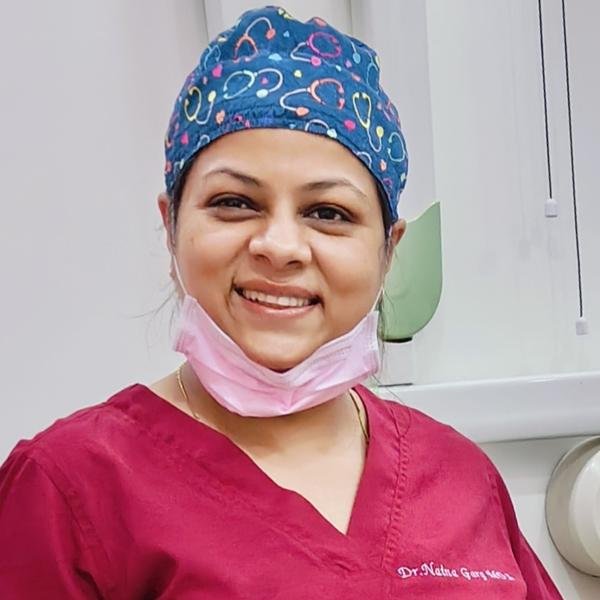
Dr. Naina Garg
Dr Naina Garg is the founder and lead dentist at Smileline Dental Clinic, Sector 27, Noida. She holds an MDS in Conservative Dentistry & Endodontics and has more than 16 years of clinical experience. Recommendations are based on whether a tooth is predictably restorable and on the patient's individual circumstances.

